
LET International School: Designing Education for a World That Does Not Yet Exist
An interview with Dr. Ingvar Stål
Education is changing faster than many educational systems can respond.
Artificial intelligence, digitalisation, global mobility, cultural complexity and rapidly changing professional landscapes are forcing us to reconsider a fundamental question:
What should education actually prepare young people for?
For Dr. Ingvar Stål, founder and President of LET Education Alliance, the answer is not simply to give students more knowledge. It is to create an environment in which young people learn how to investigate, think, collaborate, create, question and take responsibility for their own learning and for the world around them.
At the heart of LET International School is HILE — Humanistic & Investigative Learning Environment.
HILE has its roots in educational practice, research and curriculum development influenced by Finnish and broader Scandinavian educational traditions. These traditions place strong emphasis on learner agency, trust, teacher professionalism, collaboration, interdisciplinarity, connection with real life and the development of the whole learner.
LET International School takes these principles into an international setting and combines them with internationally recognised academic qualifications, rigorous examinations, personalised learning, interdisciplinary learning and the possibilities offered by digital technologies and artificial intelligence.
The result is an educational proposition designed not simply to prepare students for today’s world—but to help them learn their way into the future.
1. Vision and Core Values
What was the founding catalyst for this school? What specific gap in the current educational landscape were you looking to fill?
The catalyst was a simple observation that became increasingly difficult to ignore:
We are educating young people for a world that no longer exists.
My own educational background is deeply connected to Finland, where I worked as a teacher and school leader, and to interdisciplinary curriculum design and educational research.
Over many years, I became increasingly interested in a fundamental question:
What happens when we design the curriculum around the learner rather than around the textbook?
Finnish and Scandinavian educational traditions have demonstrated the importance of learner autonomy, trust, collaboration, interdisciplinary learning, teacher professionalism and connecting education with real life.
But the world our students are entering requires us to take these principles further.
Digitalisation and artificial intelligence have changed the relationship between humans and knowledge. Globalisation has made cultural understanding increasingly important. And the jobs many young people will have in ten or twenty years may not even exist today.
LET International School was created in response to this challenge.
We are not simply creating another international school.
We are creating a learning environment in which academic rigour, personal development, investigation, interdisciplinary thinking and learner agency are deliberately designed into the curriculum itself.
That is the foundation of HILE.
At the same time, we do not believe that educational innovation means abandoning academic standards.
HILE changes how students learn; it does not lower the standards by which learning is recognised.
Students therefore work towards internationally recognised Pearson Edexcel qualifications, including International GCSE and AS/A Level examinations.
For us, there is no contradiction between investigative learning and rigorous examination.
The challenge is to prepare students to succeed in examinations without reducing education to examination preparation.
That distinction is fundamental.
Beyond the marketing materials, how do your core values actively manifest in the daily lives of the students? Can you give a concrete example?
Our values are not intended to be words displayed on a wall.
They have to be visible in what students actually do.
The Finnish and Scandinavian influence becomes particularly visible in the relationship between the student, teacher and curriculum.
Instead of beginning a learning sequence simply by saying, “Today we are going to learn this chapter,” we may begin with a phenomenon, problem or question.
A student might ask:
“Why is this happening?”
The next question becomes:
“How could we investigate it?”
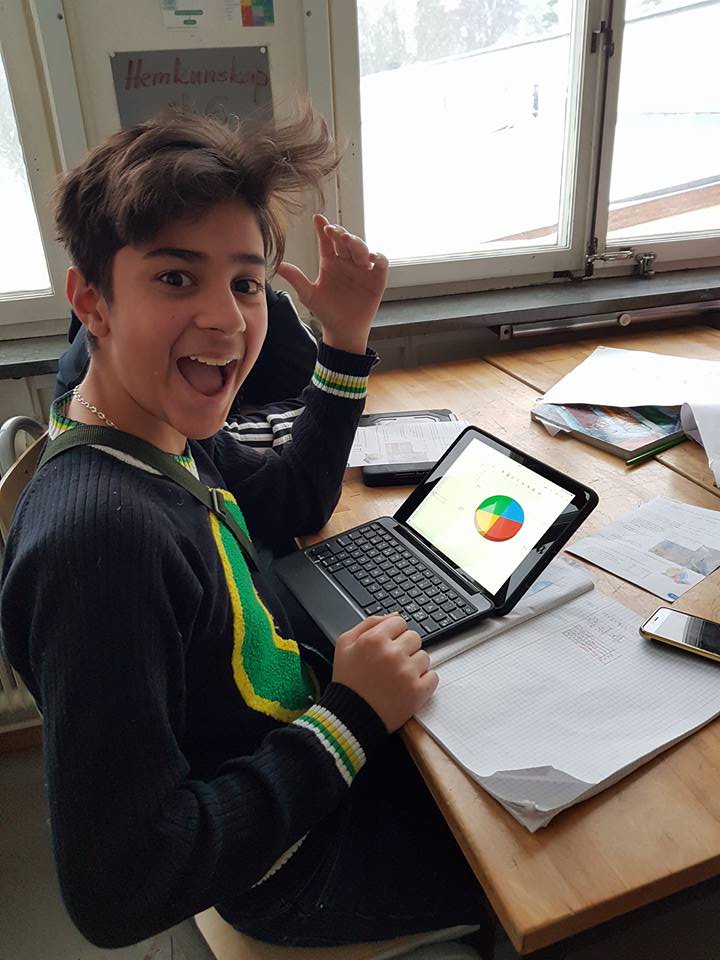
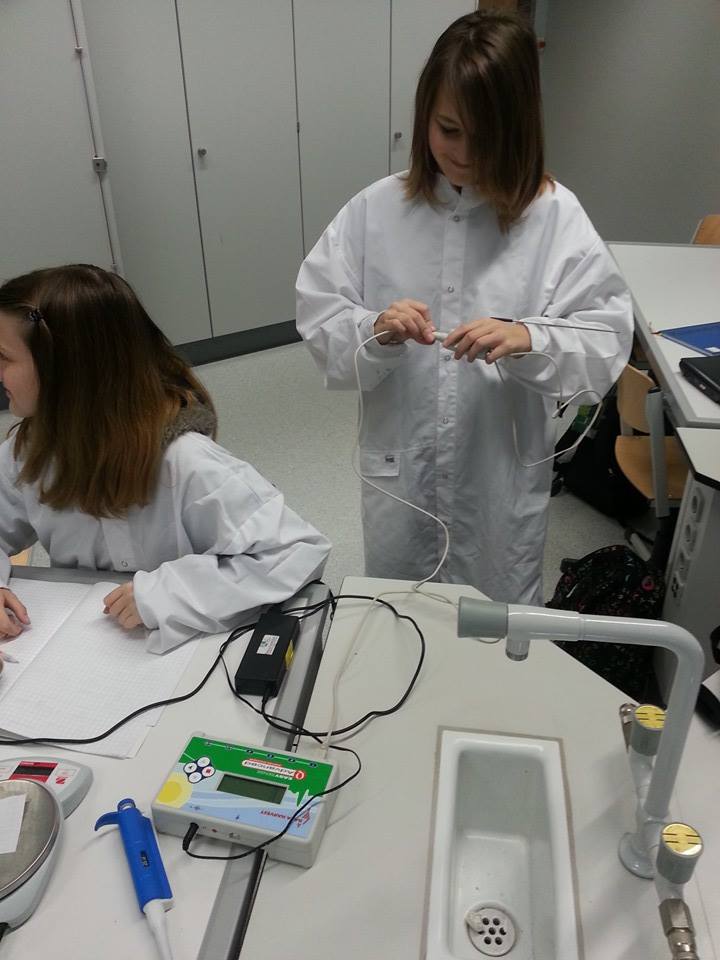
Students formulate questions, develop hypotheses, search for information, evaluate sources, use digital and AI tools, collaborate, analyse evidence and present their conclusions.
The teacher remains essential—but the teacher is no longer simply the person who possesses the answers.
The teacher becomes the person who creates the conditions in which meaningful learning can happen.
At the same time, the student must acquire the disciplinary knowledge required by the curriculum and ultimately demonstrate that knowledge through formal assessment and examinations.
This is important.
We are not replacing knowledge with investigation.
We are connecting knowledge with investigation.
A student preparing for an examination should understand the subject deeply, not simply memorise enough information to reproduce it.
That is one of the fundamental principles of HILE:
The learner is not an object of education. The learner is an active participant in creating knowledge and meaning.
How do you define “global citizenship” in your specific context? How does the school foster this mindset within its walls?
For us, global citizenship is not simply about having students from different countries sitting in the same classroom.
International diversity is not the same thing as global citizenship.
Global citizenship means understanding that our decisions, problems and opportunities are interconnected.
The Finnish and Scandinavian curriculum tradition has influenced our belief that education should develop not only academic knowledge but also responsibility, participation, cooperation and the capacity to contribute to society.
We take this into an international context.
A student investigating climate change, migration, artificial intelligence, inequality or technological development should learn to look beyond a single national or cultural perspective.
We want students to develop three capacities:
- Understand the world.
- Understand other people.
- Understand your own responsibility within it.
Our international partnerships, university collaborations and learning projects help turn these ideas into practical experiences.
And this is also where academic learning matters.
Global citizenship cannot be built on good intentions alone. Students need knowledge of history, science, economics, politics, culture and society in order to understand complex global issues.
Knowledge gives students the foundation; investigation gives them the ability to use it.
What kind of culture are you actively trying to build among the teaching staff to support this vision?
We are trying to build a culture in which teachers are learners too.
This is another area where the Finnish and Scandinavian influence is particularly important.
We believe strongly in teacher professionalism and trust.
Teachers should not be treated simply as implementers of someone else’s lesson plans. They are professional educators who interpret curriculum, respond to learners and continuously develop their practice.
A teacher working in an investigative learning environment cannot simply say:
“I have taught this topic for twenty years, so I already know exactly how this lesson will work.”
Students will surprise us.
AI will change the possibilities.
New problems will emerge.
The teacher therefore needs intellectual curiosity, humility and a willingness to investigate alongside the students.
We want teachers to become researchers of their own practice and regularly ask:
“What did my students teach me today—and what should I change tomorrow?”
This does not mean abandoning structure or academic expectations.
On the contrary, professional autonomy requires professional responsibility.
Teachers need to ensure that students develop the knowledge, competencies and academic preparation necessary to succeed in their formal qualifications and examinations.
This also connects directly to our model of distributed leadership.
Expertise should not flow only from the top of the organisation. Teachers, students, researchers, university partners and external experts can all contribute to the development of the learning environment.
2. The Unique Value Proposition & Differentiation
The international school market is often quite saturated. What is the single most fundamental difference between your school and the established institutions in the area?
The most fundamental difference is this:
We do not start with the question, “How do we deliver the curriculum?” We start with the question, “How do we create the conditions for deep learning?”
Many schools are curriculum-driven.
LET International School is learning-driven.
But learning-driven does not mean examination-free or academically less demanding.
Our educational model has its roots in Finnish and Scandinavian approaches to curriculum design and pedagogy, while our students also work towards internationally recognised academic qualifications through Pearson Edexcel International GCSE and AS/A Level examinations.
This creates an important balance.
Students experience a rich, interdisciplinary and investigative learning environment, but they are also expected to demonstrate their knowledge and competencies through formal, rigorous and externally recognised assessment.
We therefore reject the false choice between:
“innovative learning” and “academic rigour.”
We believe students need both.
The difference is that we do not want examinations to define the whole educational experience.
Examinations should be an important measure of achievement—not the definition of education itself.
Our students need to know the subject matter, master the required academic content and be able to perform under formal assessment conditions.
But they should also understand why they are learning it, how it connects with other knowledge and how they can use it beyond the examination room.
What is entirely unique about your academic or pedagogical proposition?
HILE—Humanistic & Investigative Learning Environment—is the core of our proposition.
HILE has developed through years of educational research, practice and curriculum design, particularly influenced by Finnish and Scandinavian educational thinking.
It brings together traditions that are often treated separately: humanistic education, inquiry-based learning, interdisciplinary learning, personalised learning, collaborative learning and technology-enhanced education.
But the important point is not the combination of fashionable educational terms.
It is the underlying philosophy:
Students should not merely receive knowledge. They should investigate, question, connect, create and make meaning.
The HILE 2.5 Odyssey programme provides an unusual structure for students approximately (14)16–21 years old.
It combines an interdisciplinary HILE curriculum with Pearson Edexcel International GCSE and AS/A Level pathways, Individual Learning Plans and a learning environment designed to develop both academic and future-oriented competencies.
Students therefore experience two dimensions of education simultaneously:
Depth of knowledge and breadth of investigation.
They learn the academic content required for internationally recognised qualifications, while also learning how to apply, connect, question and extend that knowledge.
We are deliberately moving beyond the model of:
one curriculum, one pace, one pathway.
How does your curriculum adapt to the rapid changes in the modern world? How are you preparing students for jobs and challenges that do not yet exist?
This is precisely where curriculum design becomes critical.
We cannot predict the jobs our students will have in twenty years.
Therefore, we should stop pretending that we can simply identify a list of future occupations and train students for them.
Instead, we need to develop future-learning capacity.
The Finnish and Scandinavian curriculum tradition has influenced our belief that curriculum should provide direction and coherence while leaving room for adaptation, local context and learner needs.
HILE extends this principle.
Students need disciplinary knowledge, but they also need to know how to connect knowledge across disciplines.
They need digital competence, but also critical digital literacy.
They need AI skills, but also the ability to question AI-generated information.
They need academic qualifications, but also the capacity to continue learning when their qualifications eventually become outdated.
There is another misconception we want to avoid.
Preparing students for an uncertain future does not mean abandoning established academic knowledge.
Students still need mathematics, sciences, languages, humanities and other disciplinary foundations.
They need conceptual understanding, factual knowledge and the ability to communicate that knowledge accurately.
And they need to be able to demonstrate their learning through rigorous assessment.
The difference is that we do not see examination preparation as the whole purpose of schooling.
We prepare students for examinations as part of preparing them for life—not prepare them for life by teaching only how to pass examinations.
AI makes this distinction even more important.
If AI can provide an answer in seconds, the educational questions become:
Can the student formulate the right question?
Can they evaluate the answer?
Can they recognise bias?
Can they challenge the evidence?
Can they use the information creatively?
Those are much deeper educational challenges than simply teaching students how to use a particular technology.
Our objective is therefore not to predict the future job market.
It is to develop young people who can:
Learn their way into an uncertain future.
What role does the local community and host country Switzerland play in your international curriculum?
Our curriculum has an international orientation, but it is not geographically detached.
This is also consistent with our Scandinavian curriculum perspective:
Learning should have a relationship with the environment in which it takes place.
Geneva offers an extraordinary learning environment.
Students are surrounded by international organisations, diplomacy, science, research, humanitarian work, finance and multicultural communities.
Rather than seeing these simply as things that exist outside the school, we see them as potential learning resources.
The city itself can become a learning environment.
At the same time, an international school should never become an isolated bubble.
Students should understand Switzerland as a society, a place and a culture while simultaneously developing perspectives that extend far beyond it.
The local becomes a gateway to the global.
3. Track Record and Leadership Accountability
As a newer institution, traditional track records (like decades of alumni data) aren’t available. How are you measuring early success and academic momentum?
We recognise that we are a new institution and therefore do not claim decades of alumni data.
However, the educational foundation itself is not new.
HILE has developed from years of educational practice, research and curriculum design, particularly influenced by Finnish and Scandinavian educational traditions.
We therefore measure success in several dimensions.
Academic progress matters, of course.
And because our students follow internationally recognised examination pathways, their formal academic achievement will provide an important external measure of their progress.
But examination results are not our only measure.
We also look at the quality of student investigations, learner independence, development of competencies, student engagement, reflection, collaboration and the ability to transfer learning between different contexts.
We also believe strongly in student voice.
If a student can explain not only what they have learned but how they learned it, why it matters and what questions remain unanswered, we see evidence of genuine educational development.
Ultimately, we ask:
Are students becoming more capable of learning independently than when they entered?
That is one of our most important indicators of success.
What milestones or early wins is the leadership team most proud of achieving so far?
One achievement I am particularly proud of is that HILE has moved from being an educational concept developed through years of research and practice into an international educational framework.
We have worked with schools and educational partners in several countries and have developed an international network around the approach.
The establishment of LET Education Alliance has taken this work to another level.
It gives us the opportunity to connect schools, universities, educators and educational innovators across national boundaries.
For me, however, the most important milestone is not institutional.
It is seeing educators begin to ask different questions about learning.
When the questions teachers ask change, the possibilities for students change too.
What specific expertise and past educational successes do you and your leadership team bring to ensure the school delivers on its promises?
The leadership team combines educational research, school leadership, curriculum development, international collaboration and operational experience.
My own background is rooted in mathematics and physics teaching, school leadership and interdisciplinary curriculum design, together with research into humanistic science education, inquiry-based learning, gifted education, collaborative learning and technology-enhanced learning.
My work has also been strongly influenced by the Finnish and Scandinavian educational context, particularly the way curriculum can be designed around learners, competencies, interdisciplinary connections and meaningful learning rather than simply around the transmission of subject content.
But I do not believe that one person should represent the knowledge of an educational organisation.
That is why LET is deliberately structured around distributed leadership.
Our team brings complementary expertise in educational strategy, international partnerships, operations, future learning, digital and AI-supported education and regional development.
The principle is simple:
A future-oriented school cannot be built around one expert. It has to become an ecosystem of expertise.
Can you share an example of a challenge the school has faced in its early stages and how your team navigated it?
The greatest challenge has been exactly what many educational innovators experience:
How do you introduce a genuinely different model into an educational world that is accustomed to familiar structures?
It is much easier to explain a conventional school.
You have classrooms, subjects, timetables, teachers and examinations.
When you say, “We want students to investigate, teachers to facilitate, disciplines to interact and learning pathways to become more personalised,” people naturally ask:
“But what does that actually look like?”
Our response has been to stop trying to explain everything theoretically and instead create opportunities for people to experience HILE.
That is one reason our Soft-Landing approach is important.
We want educators, families and potential partners to experience the learning environment rather than simply read about it.
4. Community and Student Experience
What does a “successful” student look like when they graduate from your program?
A successful graduate is not necessarily the student with the highest grades.
But academic achievement certainly matters.
The Finnish and Scandinavian educational tradition has influenced our belief that education should develop the whole learner, not merely produce examination results.
A successful graduate should have strong academic foundations and internationally recognised qualifications.
They should also have the ability to succeed in formal examinations and progress confidently into higher education or professional pathways.
But that is not enough.
We want a young person who has developed:
- Curiosity.
- Independence.
- Critical thinking.
- Creativity.
- Collaboration.
- Interdisciplinary thinking.
- Digital and AI literacy.
- Self-awareness.
- Responsibility.
Most importantly, we want graduates who understand themselves as lifelong learners.
If a student leaves us thinking, “My education is finished,” we have not achieved our objective.
If they leave thinking:
“I know how to keep learning.”
then we have succeeded.
Our ambition is therefore both academic excellence and learning excellence.
How is the school handling student well-being, mental health, and social-emotional learning?
Well-being cannot be treated as an additional programme placed next to academic learning.
It is part of the learning environment itself.
This is consistent with our Scandinavian educational influence: students need meaningful relationships, psychological safety, autonomy, belonging and opportunities to experience competence.
HILE therefore places importance on reflection, dialogue, collaboration, student agency and the relationship between teacher and learner.
We also recognise that young people are living in a world of enormous pressure and uncertainty.
The answer is not simply to reduce academic expectations.
Rather:
The goal is to create an environment where students can experience challenge without losing their sense of security, dignity and belonging.
Students should be challenged to grow—but they should never feel that their worth depends entirely on performance.
Academic rigour and well-being should not be enemies.
The right learning environment can make high expectations meaningful rather than overwhelming.
What is your approach to parental involvement? How do you see the partnership between the international school and the families?
Parents are not customers standing outside the educational process.
They are partners.
The most effective relationship is one where the school, student and family understand that they have different but complementary responsibilities.
The school provides the professional educational environment.
The student takes increasing ownership of learning.
The family provides support, encouragement and an important understanding of the young person beyond the school environment.
Communication therefore needs to be more than reporting grades.
We want families to understand how their young person is developing as a learner, not simply whether an assignment received 78% or 85%.
At the same time, parents should be able to understand how their child’s investigative and interdisciplinary learning connects with the formal academic requirements and examination pathways.
Transparency is essential.
Families should never have to choose between trusting an innovative educational model and knowing that their child is receiving rigorous academic preparation.
They should be able to have both.
5. Next Steps and Registration
What specific qualities or mindset are you looking for in the families and students who join your early cohorts?
We are not looking for a particular type of personality.
We are looking for curiosity rather than perfection.
A student does not have to arrive knowing exactly what they want to become.
In fact, I would prefer a student who says:
“I don’t know yet—but I have many questions.”
We value students who are willing to investigate, collaborate, take responsibility and reflect on their own learning.
At the same time, students need to understand that HILE is academically demanding.
Curiosity is not an alternative to discipline.
Creativity is not an alternative to knowledge.
Investigation is not an alternative to examinations.
They work together.
Families also need to understand that HILE is not simply a different timetable or a different collection of subjects.
It requires a different relationship with learning.
The programme is influenced by Finnish and Scandinavian approaches to curriculum design, but it is designed for an international context and leads towards recognised academic qualifications.
Students therefore need to be willing to become active participants in their education while taking responsibility for meeting demanding academic expectations.
For families who are interested in learning more, what is the best way to experience the school’s culture before making a decision?
Experience it rather than simply reading about it.
Educational philosophy is difficult to understand through a brochure.
A brochure can describe Finnish and Scandinavian educational principles. It can explain inquiry, interdisciplinarity, learner agency and personalised learning.
But none of that is as powerful as seeing students actually learning in this way.
That is why our Soft-Landing concept is so important.
It gives prospective students, families and educators an opportunity to experience the HILE approach and understand what this kind of learning environment actually feels like.
We are also developing opportunities for school visits, conversations, presentations and learning experiences.
Because ultimately, the question is not:
“Does HILE sound interesting?”
The better question is:
“Would my child thrive in this kind of learning environment?”
And there is another question families should ask:
“Will my child receive both the freedom to explore and the academic structure needed to succeed?”
Our answer is yes.
That balance is at the heart of the HILE 2.5 Odyssey.
Could you walk us through the exact steps, timeline, and key deadlines for the registration and enrollment process?
The HILE 2.5 Odyssey is designed for students approximately (14)16–21 years old and is delivered in English.
The programme extends over 2.5 years and combines the interdisciplinary HILE curriculum with Pearson Edexcel International GCSE and AS/A Level pathways, supported by an Individual Learning Plan.
The admissions process is designed to be personal rather than bureaucratic.
Step 1 — Initial contact
The family contacts LET International School and receives information about the programme, the HILE educational approach and the academic pathways.
Step 2 — Student and family conversation
We want to understand the student’s background, interests, aspirations and learning needs.
Equally importantly, the student and family have the opportunity to ask questions about HILE, the curriculum, academic expectations and examinations.
Step 3 — Academic and learning profile
We review the student’s previous educational experience and determine the most appropriate academic and learning pathway.
This is particularly important because students may enter with different academic backgrounds and different qualification needs.
Step 4 — Individual Learning Plan
An Individual Learning Plan is developed to connect academic requirements with the student’s interests, strengths, goals and development.
The objective is not to remove academic requirements, but to create a meaningful and personalised route towards them.
Step 5 — Admission decision
Following the admissions process, the student receives confirmation of the proposed pathway and enrolment arrangements.
Step 6 — Onboarding
Before fully entering the programme, students are introduced to the HILE learning environment, expectations and ways of working.
They learn how investigation, interdisciplinary learning, independent study, digital tools, AI and formal academic preparation will work together.
The programme therefore begins with an important principle:
Personalisation does not mean lowering expectations. It means creating the conditions in which each student can meet meaningful expectations.
Families should contact the admissions team directly for the latest application calendar, available places, fees and enrolment deadlines.
A Final Thought
Perhaps the most important thing I would like families and educators to understand is that LET International School is not an attempt to create a more attractive version of traditional schooling.
We are asking a more fundamental question.
If the world is changing faster than ever before, should education continue to be organised primarily around the transmission of what we already know?
Or should we create learning environments in which young people become capable of discovering what we do not yet know?
The Finnish and Scandinavian educational tradition has taught us that trust, learner agency, teacher professionalism, collaboration and meaningful learning can form the foundation of a powerful educational culture.
HILE takes these principles further into an international, interdisciplinary and technologically changing world.
But innovation does not mean abandoning what works.
- Students still need knowledge.
- They still need academic discipline.
- They still need rigorous assessment.
- And examinations still matter.
What we are changing is the educational journey that leads to those examinations.
We want students to understand knowledge deeply rather than simply memorise it.
We want them to investigate rather than merely receive.
We want them to connect disciplines rather than experience knowledge as isolated compartments.
We want them to use AI without surrendering their own judgement.
And when the examination comes, we want them to demonstrate what they know—not because they have spent years learning how to pass tests, but because they have genuinely learned.
That is ultimately what LET International School is trying to build:
An education in which academic excellence and human development are not competing goals.
An education in which the strengths of Finnish and Scandinavian curriculum thinking meet the demands of an increasingly international and technologically transformed world.
An education in which examinations provide recognised evidence of achievement, while learning goes far beyond the examination room.
An education in which students do not simply prepare for the future—
they develop the capacity to create it.
That is the challenge behind HILE.
And that is the journey we call HILE 2.5 Odyssey.